Basics of Olive Oil Production
Olive Tree and Fruit
Olive Tree and Fruit
The olive tree is a hardy plant native to the Mediterranean climate and the olive fruit is one of the most valuable products obtained from this tree. For centuries, the olive tree has been considered sacred, especially in Mediterranean countries, and has been the main source of olive oil production. Olive trees are long-lived and can often live for hundreds of years. These trees bear fruit regularly every year and provide the most favourable conditions for olive oil production.
Olive varieties and their effects on olive oil
The types of olives used in olive oil production directly affect the flavour and quality of the oil. Various types of olives such as Gemlik, Ayvalık and Memecik are widely used in olive oil production in Turkey. Each type of olive makes a difference in the aroma and flavour profile of the oil. Especially in cold pressed olive oil, the type of olive is of great importance.
Olive Oil Production Stages
Olive Harvest
Correct harvesting time and methods
The olive oil production process starts with the harvesting of olives. Olives are usually harvested in autumn and winter. Olive harvesting can be done manually or mechanically. Manual harvesting prevents damage to the olives and provides a better quality oil. The most important factor to be considered during harvesting is to make sure that the olives are ripe and of good quality. While early harvested olives offer a more bitter flavour, the oil obtained from ripe olives has a milder taste.
Collection and preparation of olives for processing
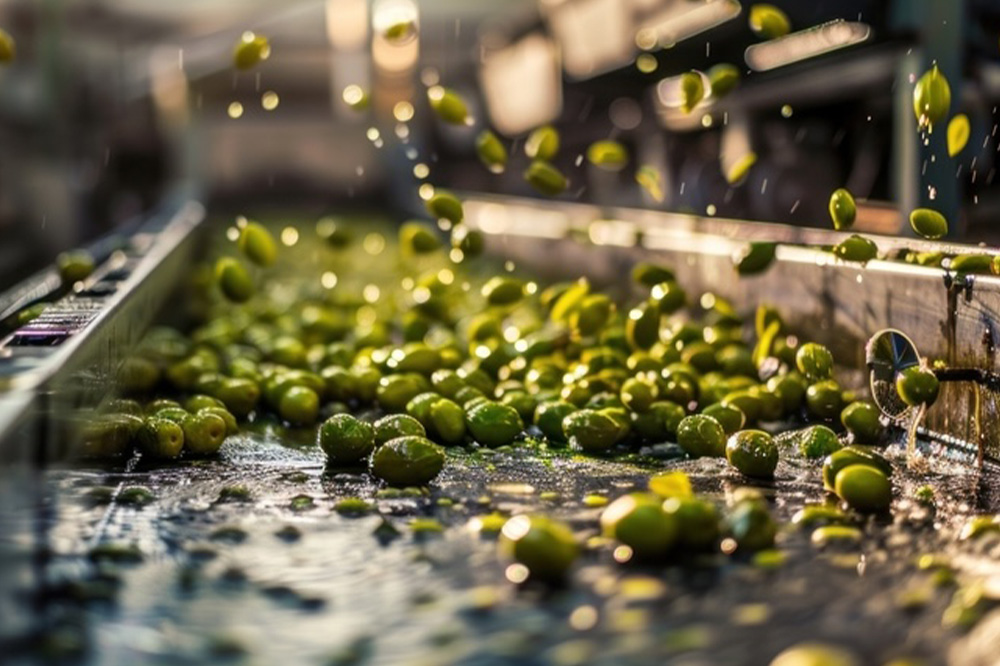
After harvesting, the olives are transported to the factories for processing. The processing of olives without waiting is of great importance in terms of preserving the quality of olive oil. The olives are washed and cleaned from the branches before the processing process. This step ensures that the dirt and foreign substances on the olives are removed.
Crushing the olives and turning them into dough
Mechanical crushing of olives
The next step in olive oil production is the crushing of olives into paste. At this stage, olives are crushed using stone mills or modern machines. The crushing process with traditional stone mills is a method that preserves the natural flavour of olive oil. After the olives are crushed, they are completely pulped, including the pits. This paste is prepared for the next stage to extract the oil.
Mixing the dough (malaxation)
The crushed olive pulp is mixed in special containers to obtain a homogenous consistency. This process allows the olive oil to separate from the fat cells. In this process called malaxation, the olive paste is gently stirred and the separation of the oil from the paste is facilitated. The duration and temperature of the process are factors that affect the quality of the oil. In cold pressed olive oil production, this stage is carried out at low temperatures.
Extraction and Separation of Olive Oil
Olive oil separation
Separation of olive oil and water
After the olive pulp has been sufficiently mixed, the olive oil is extracted. This process is usually done by pressing or centrifugation. In the traditional pressing method, the olive pulp is left under pressure and the oil comes out. In the modern centrifuge method, the pulp is rapidly rotated and the oil, water and pulp are separated. The centrifuge method is a faster and more efficient oil extraction process.
Filtration of olive oil
After extraction, the olive oil is subjected to straining and filtration processes. At this stage, sediments and water residues are removed from the oil. While unfiltered olive oil may have a more intense flavour, filtered oil gains a clearer and more refined structure. However, some producers prefer to offer olive oil in its natural state, preserving its sediment.
Storage and Bottling of Olive Oil
Correct storage conditions of olive oil
Storage process of olive oil
Olive oil should be stored carefully after production. Since light, heat and air can adversely affect the quality of olive oil, it is important to store the oil in dark coloured bottles and in cool environments. Storing olive oil under the right conditions prolongs its shelf life and preserves its flavour. In addition, contact with air should be limited to prevent oxidation of the oil.
Bottling and labelling of olive oil
After being stored under appropriate conditions, olive oil is bottled and offered to the consumer. Bottles are usually made of dark glass and protect the oil from sunlight. Bottled olive oil is labelled according to its quality and production method. Labels such as cold pressed, extra virgin olive oil provide information on how olive oil is produced and guide consumers in making choices.
Types of Olive Oil
Types of Olive Oil
Cold pressed olive oil
Cold-pressed olive oil is obtained by processing olives at low temperature and is considered one of the highest quality types of olive oil. This method preserves the natural nutritional values and aromatic properties of olive oil. Cold pressed olive oil is especially preferred in salads and cold dishes.
Extra virgin olive oil
Extra virgin olive oil is a natural oil obtained from olives by mechanical methods. No chemical treatment is applied in extra virgin olive oil and therefore it is considered as pure olive oil. It is frequently used in both meals and beauty products. Extra virgin olive oil is also a healthy choice with its low acidity.
Refined olive oil
How is refined olive oil obtained?
Refined olive oil is produced by processing oils usually obtained from low-quality olives. Refined using high temperature and chemical processes, this oil contains less nutritional value than extra virgin olive oil. This oil, which can be used in cooking, offers the flavour of olive oil in a mild way.
Quality differences in olive oil production
The methods used in the olive oil production process directly affect the quality of the oil. Cold pressed and extra virgin olive oil are the highest quality options. While refined olive oil is more affordable, it is of lower quality in terms of nutritional value. As a consumer, paying attention to the production process when choosing olive oil ensures that you choose the best product in terms of both health and flavour.




 digitasarim October 18, 2024